AT THE STILL POINT: REFLECTIONS AND SLOW PRACTICES FOR INHABITING THE PRESENT
inspired by T.S. Eliot and John Keats
WELCOME
Thank you for choosing At the Still Point, a companion you can follow at your own rhythm.
Before you start I would like to remind you that this notebook is a translation of the original version, which was written and conceived in Italian. Some images, rhythms, and nuances belong to that first language, and I have done my best to translate them accurately as possible.
How to use this offering:
You can move through it all at once or little by little.
You can come back to it whenever you feel the need.
You can let it surprise you, or choose where to begin.
I invite you to think of this notebook as an intimate space, a moment set aside just for you — not something to “consume,” but something to dwell in.
If you like, you can write down any thoughts, feelings, or questions that come up while reading or meditating. It’s not necessary, but writing can sometimes open a doorway.
To listen to the meditation, click the link in the dedicated section. You can also download the sensory practice PDF and use it whenever you wish.
This notebook is meant to be a companion, not a guide. I hope that within its pages — and its quiet moments — you’ll find a small still point.
Thank you for being here.
If you want, you can receive updates about future notebooks or similar paths. But for now, just this: take all the time you need.
And if you ever feel like sharing a thought or a feeling about what you’ve read or practiced, I’ll be happy to receive it. casaculturaquieta@gmail.com
With care and gratitude
Firava
AT THE STILL POINT
“Neither from nor towards; at the still point, there the dance is”.
— Burnt Norton, T.S. Eliot
In November I returned to India, and in the same month I read “Burnt Norton” by T. S. Eliot and “ToAutumn” by John Keats — two poems shaped by opposite sensibilities. Keats moves through sensory abundance; Eliot turns inward, toward stillness and time. Yet both suggest the same gesture: not to rush through time, but to inhabit it with conscious presence.
During my time in India I met new people and I also encountered the familiar challenges that every journey carries with it. Among these was an apparently trivial oversight: I had forgotten my yoga mat at home. I call it a yoga mat for simplicity, but in truth it’s a mat I use for a lot of things — pilates, weights, meditation, sensory practices, even intuitive writing. It’s an important object for me, it’s a little traveling home.
At first, not being able to practice brought back old demons and stern inner voices: “Same old you! You never get it right.” You could have organised yourself better. Always last minute, always in a rush.” Then another voice urged me to act, to take the situation into my own hands.
After various attempts and days of trying everything — a mat slipperier than ice, another so worn out that it was practically useless, and finally a practice on the ground while red ants crawled into my clothes — these verses from Burnt Norton, the first poem of Eliot’s FourQuartets, opened a doorway for me:
At the still point of the turning world. Neither flesh nor fleshless;
Neither from nor towards; at the still point, there the dance is,
But neither arrest nor movement. And do not call it fixity,
Where past and future are gathered. Neither movement from nor towards,
Neither ascent nor decline. Except for the point, the still point,
There would be no dance, and there is only the dance.
I can only say, there we have been: but I cannot say where.
— Excerpt from BURNT NORTON, (No. 1 of 'Four Quartets'), by T.S. Eliot
Read the full poem here.
Written in 1936 and later published together with three poems in 1943, Burnt Norton opens a journey through four moments — Burnt Norton, East Coker, The Dry Salvages, and Little Gidding — each tied to a place that held significance in the poet’s life.
In addition, each poem of the Quartet is also symbolically linked to a season and to one of the four elements — air, earth, water, and fire, in that order.
Burnt Norton is the poem of air, and it is also the name of an old, now-abandoned manor near Chipping Campden in Gloucestershire. Eliot visited it in the summer of 1934 and explored its gardens with his friend Emily Hale.
Inspired by the manor , in particular by the rose garden, and by his own spiritual search (in the later years of his career Eliot studied texts from the Buddhist canon and the Bhagavad Gītā, and converted to Anglican Christianity), Burnt Norton not only becomes the poem of air but one that embraces themes of time, memory, and impermanence. Spiritual themes, universal themes.
It is in Burnt Norton that Eliot introduces for the first time the idea of the still point — an inner state in which time, movement, and memory converge in a kind of contemplative quiet. A place where it becomes possible to reach a truth beyond chronological time. For Eliot, understanding the flow of time and its weight in our lives is possible only by accessing what he calls the still point, a quiet yet shimmering center, similar to the “living silence” evoked by the poet Livia Chandra Candiani. It is not an isolated or physical place, but rather a oneiric den where movement is held in suspension.
The image of the suspended movement appears also in two ancient spiritual traditions. In the dance of the whirling dervishes, Sufi mystics spin in continuous circles, like planets orbiting an invisible center. Their movement is constant, yet the aim is to reach an inner, motionless center — a place of presence and union with the divine despite the dance.
The dervishes’ dance is slow, circular, attentive, but above all it is an experience that transforms a minimal space into the infinite.
Similarly, in the Hindu tradition, the cosmic dance of Shiva — Tandava — represents the perpetual movement of the universe: creation, destruction, rebirth. And yet Shiva is said to dance from a still core, from a space of pure consciousness from which everything arises and to which everything returns.
In this sense, Eliot’s still point, the dervishes’ dance, and the heart of Tandava all point to the same universal experience: finding stillness within movement, silence within sound, the eternal within the present. It is not a retreat from the world, but a finding of one’s place at its center.
Alongside time, another central theme of Burnt Norton is memory. Eliot tells us that memory stretches our sense of possibility, making us believe we could have opened doors that were, in reality, already closed. From this arises regret, a feeling that has the power to distort the present. However, In Burnt Norton memory isn't just a recollection, but a "mental place" to which one returns, often in vain. Regret makes that place seductive but sterile: it's a return that brings no growth or understanding, only a futile repetition.
Yet despite its paralyzing nature, in Eliot every emotion tied to time opens a spiritual possibility. Memory, therefore, is not for him a place to linger with melancholy, but a center — a point of contact with oneself — provided it is joined with awareness and attention.
“Only through time is time conquered,” Eliot writes, inviting us to live in the present moment, and to step into that still point which contains both transience and the possibility of eternity. In this sense, memory becomes a poetic path for inhabiting everyday life lightly, even when we are faced with difficulties.
MEDITATION — THE EMBER WITHIN
Before beginning this meditation, I want to underline something I consider essential. Literature and poetry are not, in my view, wellness pamphlets, lifestyle recipes, or remedies for pain. They are not born to fix what isn’t working, but to welcome, observe, and reveal what is already there.
Poetry doesn’t offer solutions. It offers space. Literature doesn’t heal the wound, but creates the place where we can look at it. And sometimes, when we welcome observation, something softens.
I believe that a poem — and literature more broadly — can move through the body not as a technique, but as an echo. Not to correct, but to let us feel. Not to repair, but to live in it.
This meditation (and all the practices in this collection) does not use poetry as a way to feel better. It simply allows poetry to accompany an act of presence. If quietness arises, it will be a side effect of closeness, not a goal.
Find the meditation here.
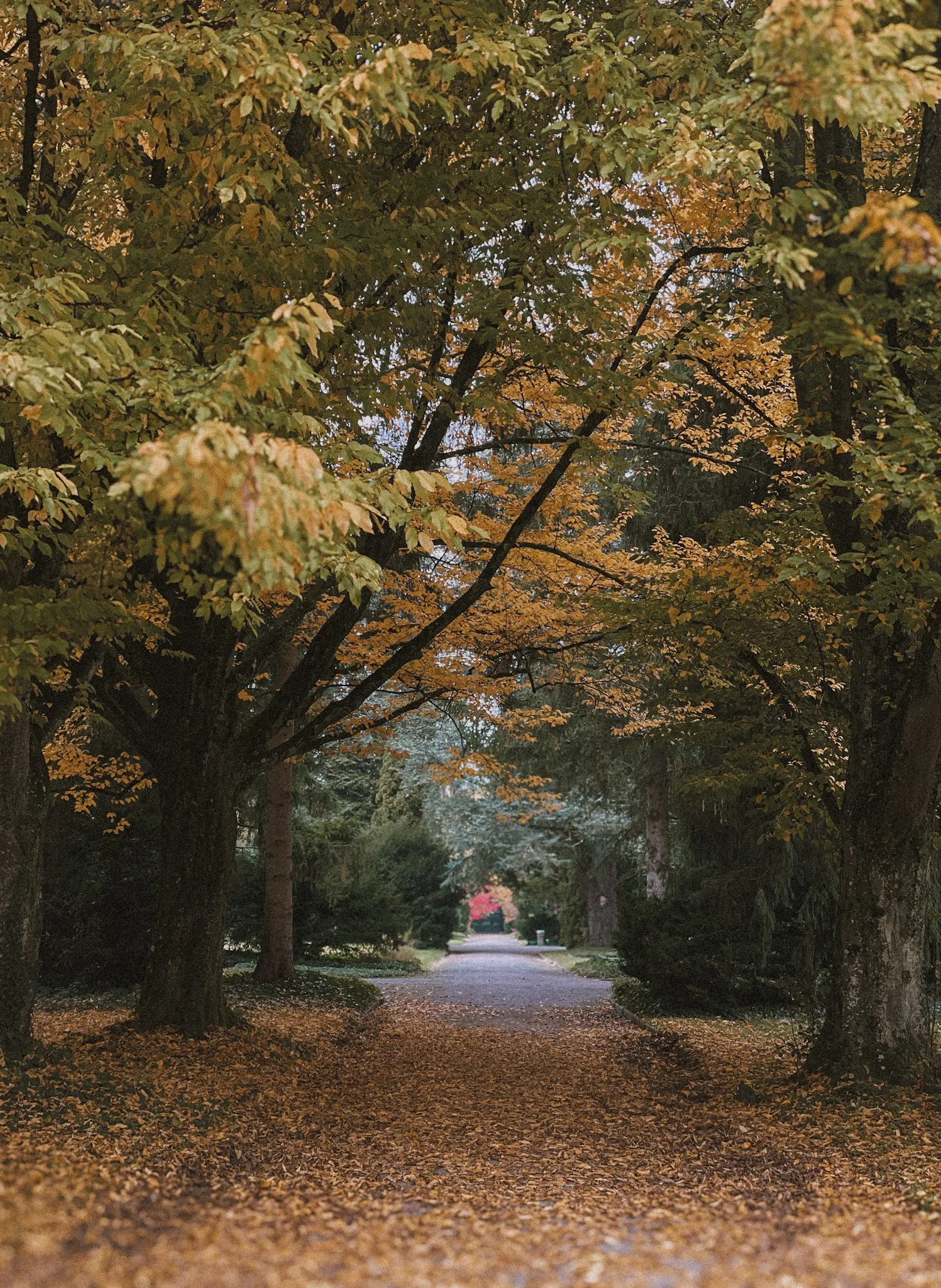
“TO AUTUMN” BY JOHN KEATS
“Season of mists and mellow fruitfulness,
Close bosom-friend of the maturing sun;
Conspiring with him how to load and bless
With fruit the vines that round the thatch-eves run”— To Autumn, John Keats
Read the full poem here.
If Eliot’s poetry leads us into a rarefied landscape, steeped in memory and silence, Keats’ brings us back to the body, to the senses, to the fullness of experience. In Ayurveda, the ancient Indian medicine, the senses are subtle gateways through which the world enters inside us and we into it. Each sense, in this tradition, is not merely a physiological function but a way of knowing, interpreting, and inhabiting reality. Sight illuminates, touch grounds, smell guides, taste nourishes, hearing harmonizes. It is through these thresholds that balance — or imbalance — takes shape.
When we read the ode To Autumn we notice that the poem does exactly this: it opens one sensory threshold after another. Keats shapes autumn not as a simple backdrop, but as an experience to be felt with the whole body.
In Ayurveda, autumn is a season governed by air and ether — elements that bring movement, lightness, uncertainty. Keats, without ever naming them, makes us feel their qualities: the swelling air, the shifting light, the slipping of time. And yet, to this lightness Keats always responds with a kind of sensory nourishment: the sight of ripe fruit, the sun swelling the pumpkin, the season’s dense fragrances, the touch of the wind that dissolves the clouds like strands of hair, the crickets’ song, the robin’s whistle in the enclosed garden, and the swallows chattering across the sky. It is a dance between Vata (the Ayurvedic principle of air that sets everything in motion) and the denser, more grounding qualities of earth that hold, welcome, root.
Thus Keats's poem, unintentionally, becomes a small Ayurvedic exercise: it reminds us that to navigate change, we need to return to our senses, one at a time. It is also suggest to let ourselves be nourished by what we perceive by relying on our bodies while the air, outside and inside us, moves.
Despite starting from two different visions, both Eliot and Keats ultimately arrive at the idea that time, like everything around us, can be fully experienced only if we immerse ourselves within it. Only through attention can the sandy veil that tinges the mind, making it restless, be lifted.
SOMETHING TO MAKE — HAND WARMERS
In many traditions touch is a way of knowing, which is why I’m offering a simple, tactile gesture to bring your hands into rhythm and presence.
Choose a soft yarn and knit a few simple rectangles, then sew them into tubes.
Work slowly, without rushing. The rhythm of knitting — stitch after stitch — is a form of meditation, and the finished pair becomes a small act of warmth. Also the hand warmers make for a lovely gift.
(If knitting isn’t an option, choose another quiet, repetitive hand activity: clearing out that overfull drawer, tidying a corner, or going out to gather chestnuts.)




ROOTED RECIPE — PUMPKIN SOUP WITH BROWN LENTILS
This recipe is inspired by Ayurveda
Ingredients (Serves 3–4)
1 cup cubed pumpkin (peeled and deseeded)
½ cup brown lentils (masoor whole), soaked for 1 hour
1 small carrot, chopped (optional for sweetness)
1 tbsp ghee or coconut oil
1 tsp cumin seeds
1-inch piece fresh ginger, grated
1 small onion, chopped (optional for Kapha; avoid for Pitta if sensitive)
¼ tsp turmeric powder
½ tsp coriander powder
¼ tsp cumin powder
¼ tsp fennel powder
1 pinch hing (asafoetida) – aids digestion
3 cups warm water or vegetable broth
Rock or Himalaya salt to taste
Juice of ½ lemon (added at the end)
Fresh cilantro or curry leaves for garnish

Method
Rinse the lentils thoroughly and soak them for at least 1 hour (this improves digestibility).
In a soup pot, warm ghee or oil over medium heat.
Add cumin seeds and let them crackle.Stir in ginger, onion, and hing. Sauté until fragrant.
Add turmeric, coriander, cumin, and fennel powders. Stir for 30 seconds to release the aromas.
Add pumpkin and carrot. Sauté for a couple of minutes to coat with spices.
Add soaked lentils and warm water or broth. Stir, bring to a boil, then reduce heat and simmer for 25–30 minutes, or until lentils and pumpkin are soft.
Once cooked, mash lightly with a spoon or blend half the soup for a creamy texture (leave some chunks for heartiness).
Add salt and a squeeze of fresh lemon juice to finish.
Garnish with fresh cilantro, or drizzle with a little ghee for richness.
A SHORT PLAYLIST
Max Richter – On the Nature of Daylight
Night — Rachmaninoff
Memories of Teheran — Amir Nasr Quintet
Bill Evans – Peace Piece
Link to the Playlist click: Nel punto fermo
Play softly while you knit, cook, or write.
WORDS TO PONDER
“And do not call it fixity,
Where past and future are gathered. Neither movement from nor towards,
Neither ascent nor decline”.— Burnt Norton, T.S. Eliot
“And sometimes like a gleaner thou dost keep
Steady thy laden head across a brook”;— To Autumn, John Keats
Let these verses enter you without thought or judgment. When we judge (beautiful, ugly, easy, difficult) we are usually trying to protect a belief, a habit, an identity. Let that protection fall away, let the thinking soften, let the words move through you for their beauty, their sound, their symbolism.
You can also choose just one word to stay with, to reflect on. Let it breathe. Let your imagination work. If you wish, you can copy the verses onto a sheet of paper, into your journal, or a notebook, and return to their secret dwelling from time to time to see whether something in you has shifted — whether these lines speak to you differently, or in another way entirely.
SENSORY PRACTICE
Returning to Keats’s verses, I’d like to offer you a small sensory practice. You can treat it as a meditation — letting the images become symbols within the body — or as an embodied exercise spread over five days, using the senses in a earthy way. To keep track of your experience I have created a PDF that you can download here.
Note:
At first glance these exercises may seem simple — to some, even childish — and yet within them they hold a seed. A seed you can grow. What I’m offering are not remedies that change your life in an instant; in fact, they are not remedies at all. They are habits to cultivate, moments to savor. They are not meant to instruct, but to help make the everyday a space of joy.
Monday — Sight
Look around you for a warm color: copper, red, gold, brown.
Notice how it changes with the light.
Observe one detail you hadn’t noticed before.
Tuesday — Touch
Choose a natural object: a leaf, a fruit, a seed, a piece of soft fabric.
Pass it slowly between your fingers.
Notice temperatures, textures, lightness or weight.
Wednesday — Smell
Inhale through your nose and notice a scent around you: the house, the wind, food, the air itself.
Don’t judge it — just recognize it.
Thursday — Hearing
Listen for two sounds: one close, one far away.
Let them move through your body. Note any sensation without judgement.
Friday — Taste
Drink a sip of water or taste something simple.
Feel the temperature, the flavor, the texture.
Close the practice like this:
“I return to my body, to my senses, to my still point.”
AROUND THE WORLD
If you decide to widen your gaze, you may find something interesting in this section.
This part of the notebook stems from a simple question: how do different cultures observe and move through seasonal change?
As Eliot writes, “At the still point of the turning world,” there is a moment in which transformation is not something to force, but to recognize.
These examples are offered not to be replicated, but to create a space for observation.
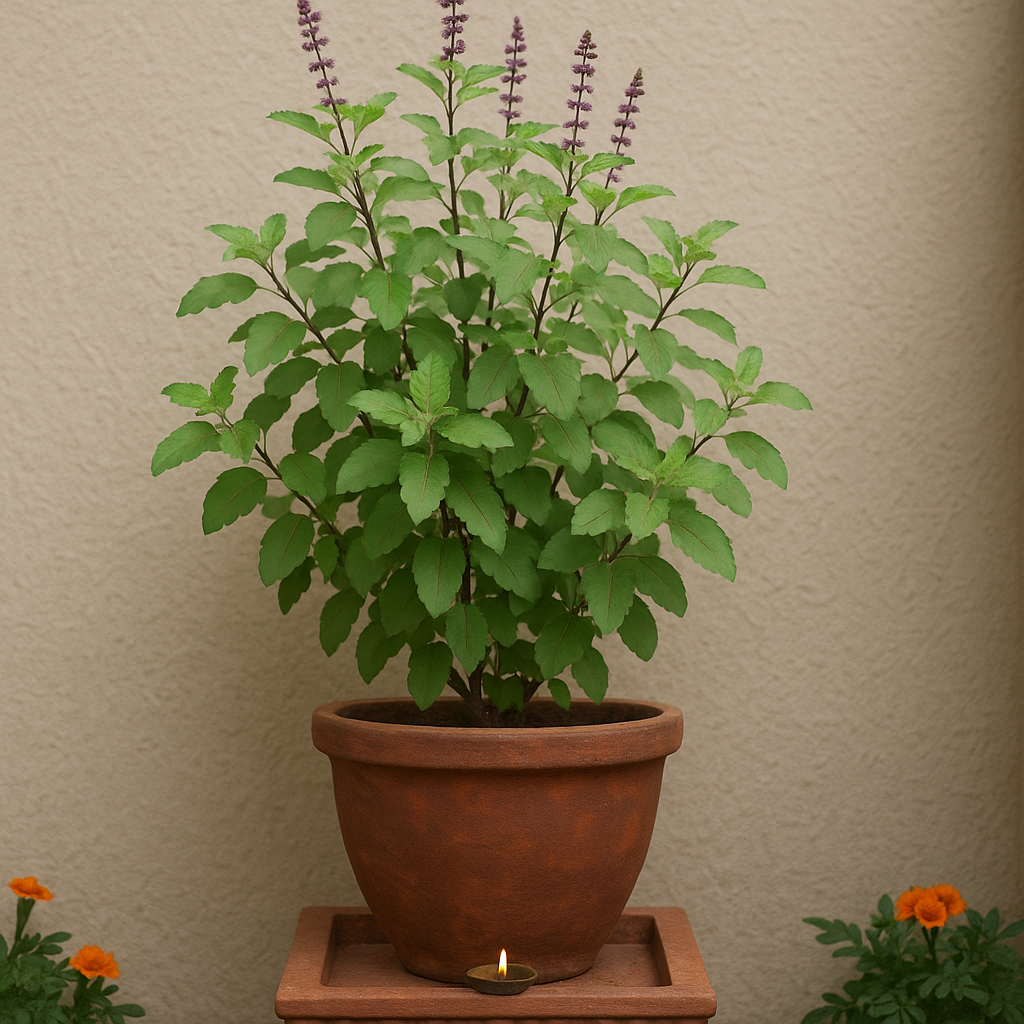
TULSI VIVAH — INDIA
The ritual of the plant as a presence
In November, in various regions of India, Tulsi Vivah is celebrated — the symbolic ceremony in which the sacred Tulsi plant (holy basil) is “married” to the deity Vishnu. It marks the transition from the rainy season to the drier one. This period also opens the season in which Indian weddings are traditionally held.
In India, the Tulsi plant is not seen merely as a piece of vegetation but as an actual goddess. It is believed that Tulasi is an avatar of Shri, the goddess Lakshmi, the Indian deity of prosperity.
Reflection
Setting aside the religious context, we can still consider the idea that a plant might be treated as an interlocutor. Not out of exoticism, but out of attention.
Possible Gesture
Choose a plant in your environment. For one week, observe its light, its water, its rhythms. One word a day about what you notice. Nothing more.
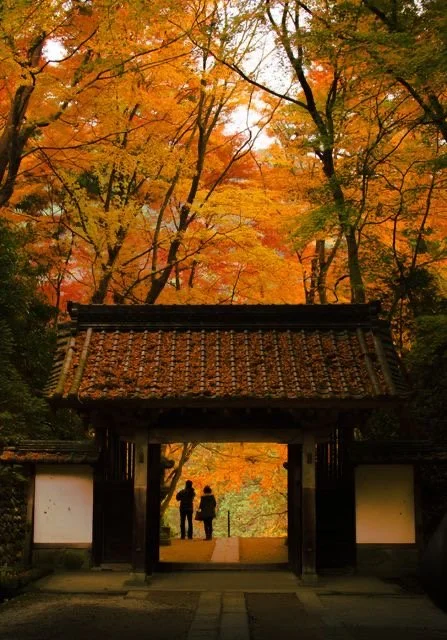
MOMIJIGARI — JAPAN
In search of autumn’s colours
In Japan, momijigari refers to the act of “hunting for red leaves.” Not picking them, not photographing them — simply observing them, while savouring each moment. Beauty becomes then not an ornament, but a recognition of transition.
Reflection
This practice is not aimed at self-improvement, but at presence within change.
Possible Gesture
If you can, take a walk and observe a tree or plant in its autumn phase. Without documenting. Without drawing conclusions. Just a few minutes of pure observation.
REFLECTIONS
If you’d like to linger a little longer on the words of Eliot and Keats, take a moment for these reflections:
Consider how Eliot’s images of “the still point” and “the dance” speak to something you have known or experienced in your life. You might write about a moment when life felt motionless inside yet full of movement around you — or a time when you found calm at the center of change. There is no need to search for an answer; a few lines, or simply a quiet observation, is enough.
Or, if you prefer, spend some time with a few of Keats’s verses and try writing your own ode to autumn, beginning from a small detail: the light inside a room, the way the branches of a familiar tree fall, or the taste of a food you particularly love. Look for a detail in your everyday life to explore in writing — or through photography, or any form of art in which you feel most at home.
A CLOSING NOTE
Thank you for pausing on these pages.
You don’t need to carry everything you’ve read with you. Sometimes a single image, a line, a simple gesture is enough. Literature can accompany you even beyond this notebook — in pauses, in small movements, in the moments when you need support or clarity.
If something has touched you, you can return to it whenever you wish. And if you’d like to continue this exploration, there will be other companions, other seasons, other texts to inhabit.
May these minimal gestures — breathing, doing, nourishing yourself, quiet companionship — help you find your still point in this season.
“What might have been and what has been
Point to one end, which is always present”.— Burnt Norton, T.S. Eliot